The Enduring Kind
With so many terrific performances over the course of his lengthy film career, it is somewhat surprising that screen actor Jeff Bridges has flown under the radar for nearly four decades. Then again, the trademarks that help make Jeff Bridges the great character actor he is are perhaps the very same ones that allow for such an extensive oversight to exist. His latest film Crazy Heart has awarded him his fifth Oscar nomination and will likely win him his first Oscar. Bridges’ first nomination was for the low-key western-drama The Last Picture Show; both the film and nomination helped Bridges launch his acting career. It seems fitting then that his role as Bad Blake in the low-key country music drama Crazy Heart would be the one that finally honors him with an Academy Award.
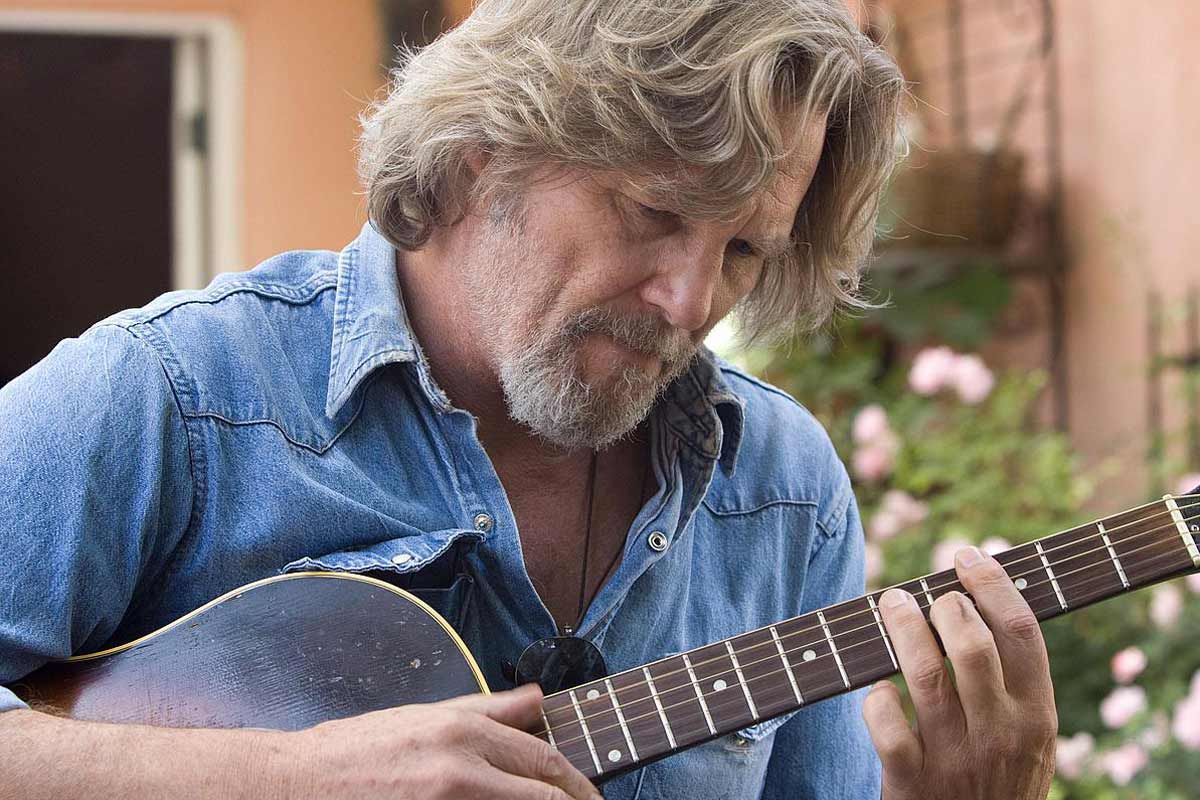
Crazy Heart tells the story of a washed-up alcoholic country singer named Bad Blake and his attempt at redemption as both a musician and a human being. It is a movie where characterization and emotional themes act as the driving forces for its plot and story. Bad is not his real name, but, as the man himself discloses, it is the name he will keep until his tombstone reveals otherwise. Such is the character of Bad Blake. He is straight and to the point and does not mince words. However, Blake is a deeply insecure man who tries to hide his demons behind quiet talk and a loud bottle of booze. As with all such characters, his weary heart eventually catches up with him.
Like all good movies, Crazy Heart slowly and subtly seeps into its viewers’ consciousness days after its first viewing. A lot – but not all – of this credit is due to Bridges’ heartbreaking performance. There was not a single moment in Crazy Heart when I found myself aware of Jeff Bridges the actor. Instead, Bridges immersed himself so seamlessly into the character of Bad Blake, that one could easily mistake his performance as being biographical. His work in Crazy Heart is a masterful example of natural acting. Not only does Bridges himself sing all of his character’s songs (with an alluring husky voice and all), but it is his more subtle touches of method acting that permit the plausibility of his emotionally climatic scenes. With every belch, grunt and nervous bite of his lip, Bridges slowly develops Blake into a fully sympathetic character. Thanks to such attention to detail, Bridges gives Blake the chance for a believable and, more importantly, substantial redemption of sobriety.
Despite what some critics and filmgoers have said about Crazy Heart, it is not a movie that relies solely on the performance of its main actor. Yes, it may be true that without Jeff Bridges this movie would not have worked as well it did, but if it were not for Maggie Gyllenhaal and her wonderful performance as Blake’s love interest Jean Craddock, Jeff Bridges himself would not have worked as well as he did. Gyllenhaal richly deserves her Oscar nomination for best supporting actress in what is surely her best performance of her young career. Her character acts as an essential motivator to Bad’s maturity and growth as a man. She is, however, a three-dimensional person in her own right. A balancing act such as this is a much more difficult task to pull off than one might think it would be. Gyllenhaal handles this challenging role beautifully, as she creates a believable character with real insecurities, real flaws and believable life choices. Without Gyllenhaal’s subtle display of Jean’s own self-realization, Blake’s redemption in all of its sincerity would not have resonated as naturally as it did.

Crazy Heart is a small and quiet movie. It develops in a slow and casual manner, and might be too laid-back for a mainstream audience to sit through comfortably. It never tries to be a plot driven movie, nor should it. Produced by legendary actor Robert Duvall (The Godfather, The Godfather Part II, Apocalypse Now), who also has a small role in the film as Bad’s old friend Wayne, Crazy Heart was destined to be a character piece. Along with Scott Cooper’s heartfelt direction, one can feel Robert Duvall’s deep understanding of human character pulsate within every scene of Crazy Heart. It seems like a deeply personal film for Robert Duvall, and one of which he should surely be proud. It won’t be the most memorable story ever told on film, but thanks to the likes of Jeff Bridges, Maggie Gyllenhaal, and T-Bone Burnett, it should be able to endure the test of time, and remain a strong affirmation of the character piece kind.


No comments:
Post a Comment